Yoga is not new and has been practiced for over 5,000 years in ancient civilizations. The Indus Valley civilization in India is attributed with some of oldest sacred texts on yoga and the sage Patanjali is credited with codifying yoga in the Yoga Sutras. Yoga has long been a lifestyle practice to achieve physical, mental, and spiritual well-being. The practice can be adapted for all bodies and it’s ethical tenets are found in the underpinnings of various world religions and faiths.
Today, a growing body of clinical evidence supports the practices of yoga as a system of health and wellness. Modern society suffers from chronic stress and disease and faces the rising cost of healthcare and prescription drugs. As people seek alternative, cost-effective, accessible, drug-free solutions, Yoga Therapy emerges as a “new” discipline using yoga’s ancient wisdom as an integrated system of health for physical, mental, and spiritual wellness. Yoga is not a pill, but is an effective holistic intervention to manage one’s health.
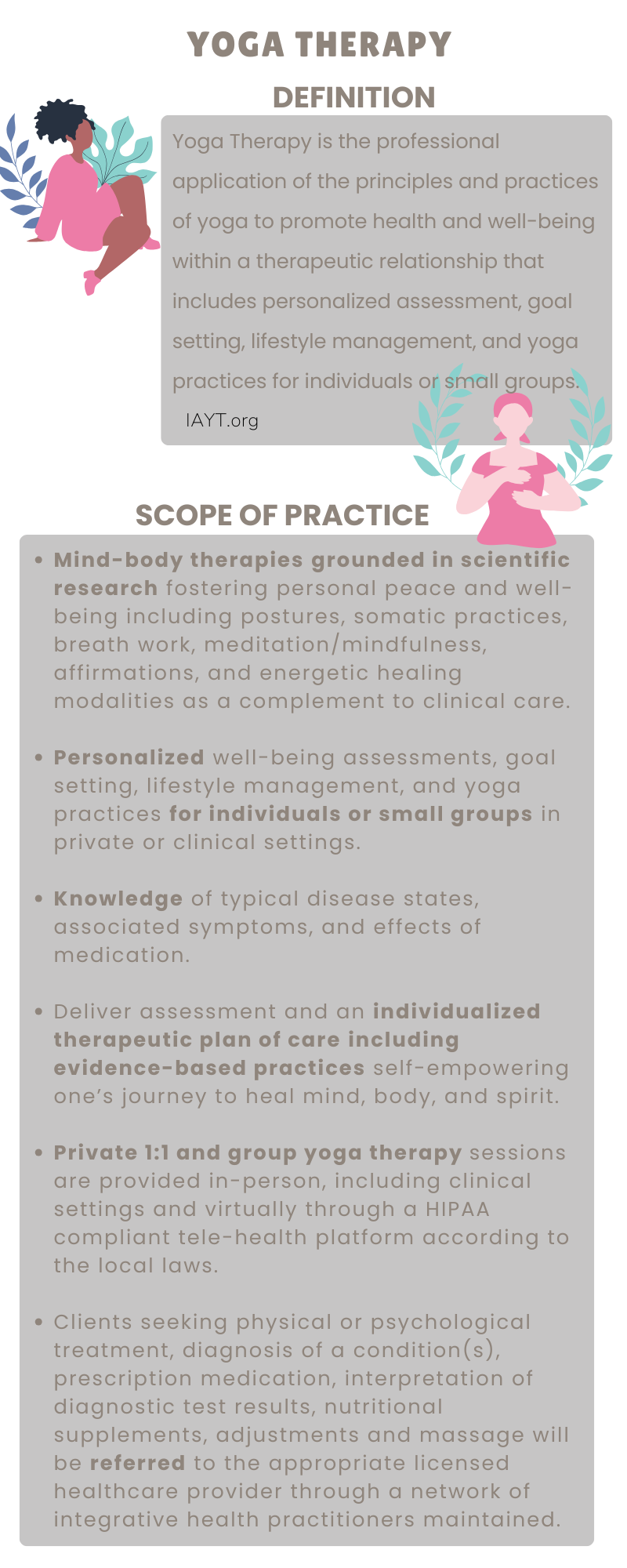
The International Association of Yoga Therapists (IAYT) is the leading global organization to certify yoga therapists (c-IAYT). They aim to advance the discipline of yoga therapy as a professional therapeutic practice. C-IAYT’s are advanced registered yoga teachers and considered integrated healthcare practitioners who partner with licensed clinicians to improve health outcomes. Yoga Therapists possess a minimum of 800 hours of yoga therapy training, supervised clinical experience, pass a certification exam, and take at least 24 hours of continuing education every three years.
 STACELILY